Essays and Notes

How vested interests can ruin a society
Why do societies eventually decline?
Read more →
Designing a New Type of Firm Using Truth-Seeking as a Compass
How virtue ethics and truth-seeking can reform capitalism
Read more →
AI and the Probability of Conflict
Asymmetric knowledge of capabilities and slow take-off could tip the balance in favour of conflict
Read more →
How Inequality Killed the Roman Republic
Once wealth was used to lock-in power, power was used to lock-in wealth.
Read more →
MacIntyre's ethics: justification and metaphysics
How does MacIntyre justify his account of morality differently from Nietzsche? A deeper look at the questions raised by After Virtue.
Read more →
On 'History Has Begun' by Bruno Maçães
The book is not really seeking to solve a problem, but rather to describe a phenomenon called political virtualism.
Should asset prices be included in inflation?
According to Zhou Xiaochuan, governor of the People's Bank of China for over 15 years until 2018, the answer is yes.
Read more →Society as a symbolic action system
Ernest Becker's The Denial of Death reveals how the drive for heroism shapes society into a symbolic action system where each person strives for significance.
Read more →A lesson for would-be reformers
Eric Hoffer's The True Believer shows why even the most powerful leaders fail at reform without harnessing nationalist fervor.
Read more →My summary of After Virtue
A pointer to my detailed summary of Alasdair MacIntyre's After Virtue, which sparked a lively and interesting discussion.
Read more →Why was early Christianity so obsessed with the rich?
Peter Brown argues that early Christian denunciations of the rich served as a safe substitute for direct criticism of imperial power.
Read more →
Summary of After Virtue by Alasdair MacIntyre
Morality and meaning are in crisis, and the solution involves recovering the Aristotelian idea of a telos.
The danger of involution
The Chinese concept of involution — a spiralling trap of futile competition — reveals the dangers of cultural monoculture for creativity.
Read more →A digital euro and full-reserve banking
A digital euro could inadvertently create full-reserve banking by the back door, with profound implications for the financial system.
Read more →How many people think life is meaningless?
UK young people placed second-to-last in the world in what they call the 'meaning in life index'.
Read more →Jason Crawford reviews “Where is my flying car?”
If people needed self-actualisation, why choose anti-technology crusades? A review that probes the roots of technological stagnation.
Read more →
Can we prime people to take risk?
Research suggests that reinterpreting pre-task arousal as excitement rather than anxiety could help overcome our growing reluctance to take risks.
Read more →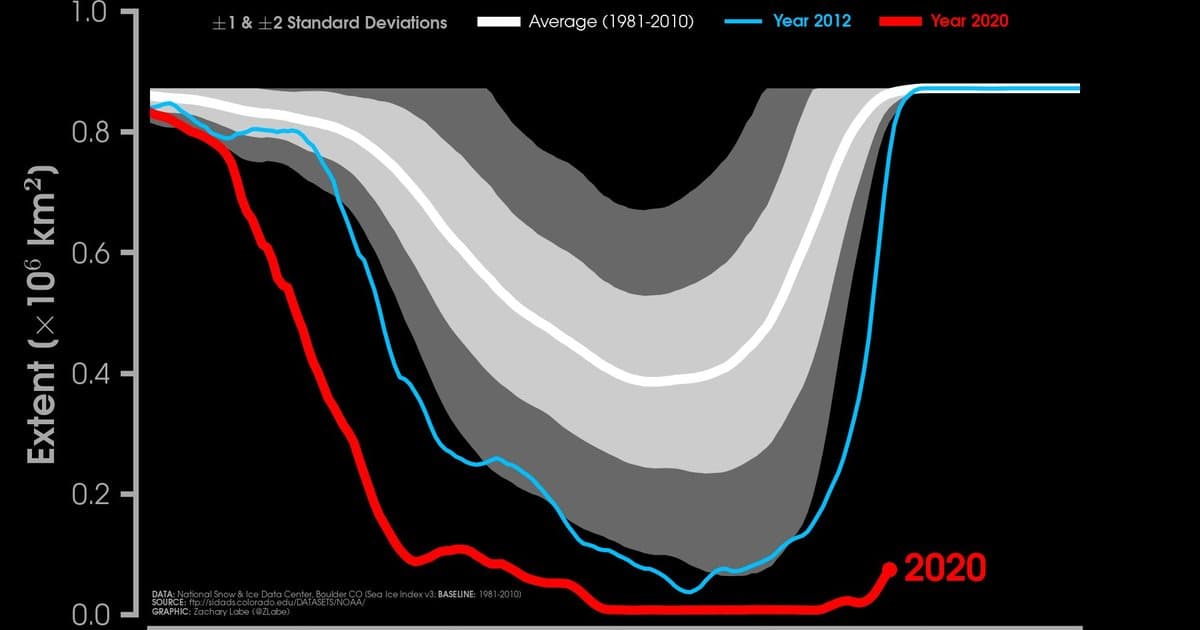
Climate: is there any hope?
Most governments tackle climate change by adjusting subsidies and taxes, but systems theory suggests we need to change the goals of society itself.
Read more →Remaining Chapters Posted
The remaining chapters — covering finance, inequality, environment, the individual, and the conclusion — are now available.
Read more →
Introduction and Overview
At just 6,000 years old, civilisation is young — and many of its kind have already fallen. Must the West share their fate?
Read more →
Ch. 1: Whispers from Fallen Civilisations
Spengler prophesied the West's decline through the dominance of money over politics. A century later, his warnings appear prescient.
Read more →Redefining happiness
Modern happiness, redefined as the endless accumulation of desire, contrasts sharply with the ancient Epicurean ideal of simple freedom from pain.
Read more →Handwriting boosts learning
EEG studies show the brain is far more active when writing by hand than typing, supporting the case for mandating handwriting training in schools.
Read more →Ch. 2: The Decline of the Elites
Why does elite creativity decline? Toynbee argued it stems from idolising outdated ideas — a pattern visible in modern liberalism.
Read more →How Metasophism takes postmodernism seriously
Metasophism embraces the scepticism of original postmodernism while rejecting the pathologies of its 'reified' successor.
Read more →Chapter Seven posted
Chapter Seven — on funding and reforming the media in a Metasophist society — is now available to read.
Read more →Ch. 3: Introducing Metasophism
When one glances back at the disaster for Europe that was the twentieth century, who are the prime candidates for blame?
Chapter Six posted
Chapter Six — How to Select an Elite — is now available to read.
Read more →Ch. 4: A Metasophist University
A new kind of university could help everyone find their true calling while fostering the interdisciplinary creativity that modern academia stifles.
Read more →How much will the internet change religion…
In an age of personalisation, the old model of standardised sermons sounds dated. Could the internet transform how we practise religion?
Read more →Ch. 5: Unifying a Metasophist Society
A society's way of creating meaning shapes the time horizons of its decisions — visibly manifested in the quality of its architecture.
Read more →Ch. 6: How to Select an Elite
Faith in democracy is waning across all generations. Could the Prussian Army's reinvention after defeat offer a model for reforming elite selection?
Read more →Ch. 7: Funding the Media in the Internet Age
Trust in the media has fallen below 50% in most countries. A new funding model is needed to restore journalism's credibility.
Read more →Ch. 8: Dethroning Finance
The dominance of finance has made GDP growth the sole criterion of national success, at the expense of measures more reflective of human flourishing.
Read more →In praise of the Stiff Upper Lip?
Joseph Henrich's research shows that how others react to our pain shapes how much we actually feel — giving new meaning to the stiff upper lip.
Read more →Ch. 9: Mitigating Inequality
Piketty showed that inequality is destined to rise, but a global wealth tax is impractical. There may be a better way to favour capital accumulation without favouring capital itself.
Read more →Thoughts on cultural decadence
The Netflix Cuties controversy reveals how social media incentivises the sexualisation of children, raising urgent questions about cultural decadence.
Read more →Ivan Krastev on Anne Applebaum
What drives intellectual supporters of Trump and Orban is not the seductive lure of authoritarianism, but their deep disappointment with the results of liberalism.
Read more →The causes of stagnation in physics
According to Sabine Hossenfelder, stagnation in physics is partly caused by groupthink and an unwillingness to reconsider how to do science.
Read more →Ch. 10: Environment, Climate, and Space
Declining fertility, rising CO2, and falling nutritional value of food suggest that civilisation's environmental crisis runs deeper than climate alone.
Read more →The surprising effectiveness of placebos
Taking a placebo or experiencing any 'sham' medical procedure can activate the very same biological pathways triggered by the active chemicals in popular drugs.
Read more →Social capital is underrated
Low social capital predicts the rise of populism. Yet few discuss it as a driver of inequality, because fixing it requires building new systems.
Read more →Secularism in decline
Tom Holland points out how secularism is increasingly being rejected by ruling elites in Turkey and India.
Read more →Thoughts on QAnon
It's a conspiracy that's been able to reach new heights during the pandemic as people around the world desperately search for community.
Read more →Ch. 11: Metasophism and the Individual
How can Metasophism summon the energy of a mass movement? Eric Hoffer's insights on nationalism and Christianity point the way.
Read more →Malcolm Gladwell: How I Rediscovered Faith
Other people's power to forgive impressed him sufficiently to renew his faith.
Read more →The Gender of a Teacher Matters
The more similar a student is to their teacher in terms of gender, ethnicity, and other markers, the more likely one is to learn from them.
Read more →The Universe still seems to be flat
New measurements of the cosmic microwave background by the Atacama Cosmology Telescope find that the universe is flat.
Read more →Does time flow backwards?
If a particle's past doesn't contain enough information to predict its fate, could the missing information be flowing backwards from the future?
Read more →Ch. 12: Conclusion
The West's soul — a longing for infinity, truth, and meaning — needs a new body. Metasophism aims to provide one.
Read more →Critique of Judith Butler
Martha Nussbaum's critique reveals how Butler's performative subversiveness avoids demands for real structural change — a pattern still visible today.
Read more →Why did premature births fall during lockdown?
One explanation for fewer premature births may be the decreases in air pollution during the lockdowns.
Read more →Cognitive benefits of walking
Studies show that regular walking mobilizes changes in the structure of our brain that can increase volume in the areas associated with learning and memory.
Read more →Harvard and Managerialism
You can't rely on a top-down hierarchical institution to select and train creative elites consistently.
Read more →Religious substitution and the power of meaning
As Christianity declines, belief in non-rational phenomena rises to fill the void — but this substitution may weaken our sense of agency and courage.
Read more →Nathan Nunn Interview with Tyler Cowen
One point raised in the interview is the negative relationship between distance to the equator and national prosperity.
Read more →The Vatican and China
The Vatican's dovish approach to China — silence on injustice in exchange for a role in appointing bishops — reveals the geopolitics of faith.
Read more →Observations on Kazakhstan
Kazakhstan's authoritarian development has rebuilt it into a Eurasian power, with surprising demographic and cultural dynamics.
Read more →Errors of Reform Conservatism
Reform conservatives failed by arguing for community without endorsing any concrete vision of it — a cautionary tale for any would-be reformer.
Read more →